
The single opt-in path for the HeadHoncho messaging program (program terms) — a handset-confirmed double opt-in. Published for carrier and campaign-registry review. Nothing is ever sent to a number beyond the one verification message below until the worker themselves confirms; silence means no messages.
STEP 1 — THE NUMBER IS COLLECTED, WITH THE DISCLOSURE
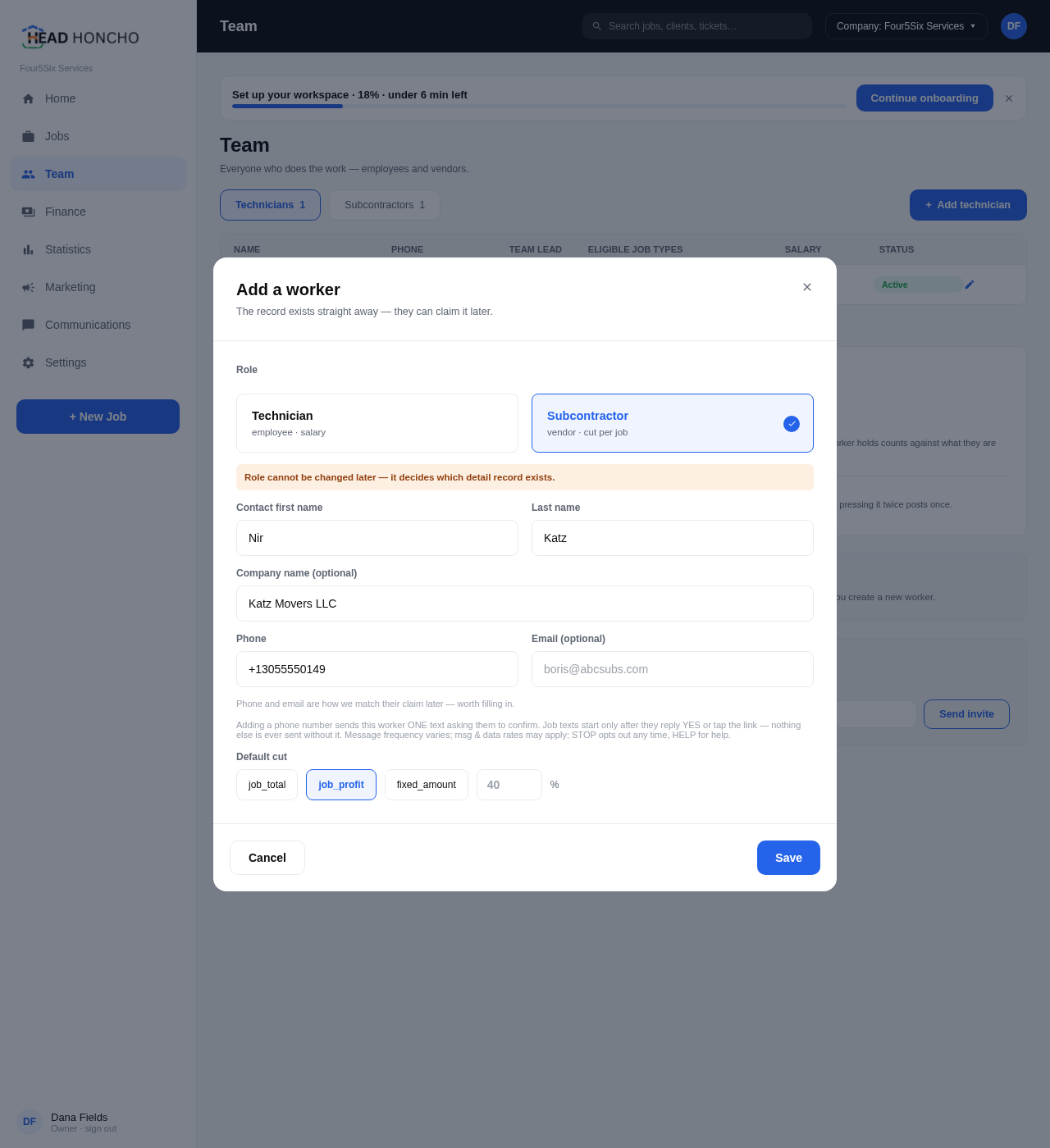
A field worker agrees with the business they work for — as part of their contractor or working agreement — to receive job-assignment texts, and gives the business their mobile number. An authorized manager enters it in the HeadHoncho Team panel. The exact collection form, with the disclosure directly beneath the phone field:
STEP 2 — ONE VERIFICATION TEXT, AND ONLY ONE
The platform sends a single confirmation request (this is the exact message shape):
STEP 3 — THE WORKER THEMSELVES CONFIRMS (OR DOESN'T)
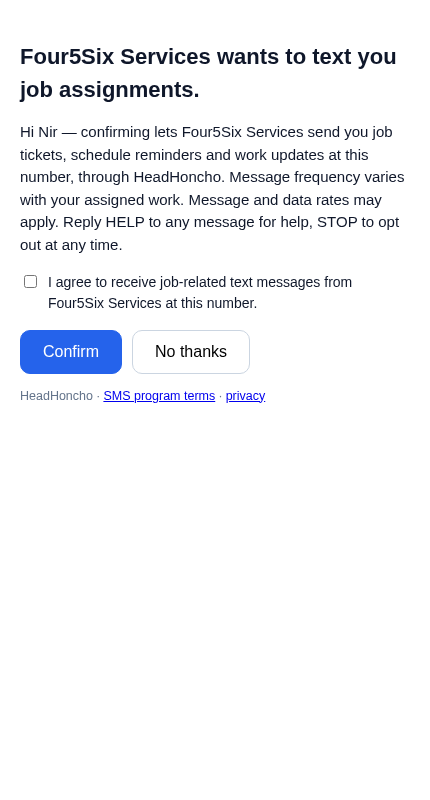
Replying YES confirms; the carrier's own message record is the consent artifact. Tapping the link opens this page — the confirmation is an active choice with an unchecked-by-default box, and declining is one tap:
If the worker never replies and never taps, nothing further is ever sent. STOP at any point — before or after confirming — opts the number out permanently. Numbers are never purchased, rented, or harvested; only workers on a business's own roster can be invited.
CUSTOMERS — THE SECOND PROGRAM
A business's customer is on a separate program with a separate consent story, because the number is given differently: the customer gives it to the business themselves, when they book the job, for updates about that job. The business enters it on the job form in HeadHoncho, under this disclosure directly beneath the phone field: "the number the customer gave for this job; job updates may be texted to it, STOP opts out." Every text names the business first, is about that job only (appointment set, a reminder before it, the job complete, the job canceled), goes out between 8am and 9pm in the business's own time zone, and STOP ends them permanently. No marketing is ever sent on this program, and nothing is sent until the business switches each alert on itself — every one starts off.